In an essay I wrote in 2011, I argued that Germany should no longer be thought of as a “civilian power” but rather as a “geo-economic power”. I argued that the weakening of the Federal Republic’s commitment to multilateralism during the previous decade and its increasing economic assertiveness, particularly within the eurozone, undermined its claim to be a “civilian power” – that is, one that used multilateral institutions and economic co-operation rather than military power to achieve its foreign policy goals. The concept of “civilian power” was originally used by François Duchêne to describe the European Union and was applied to the Federal Republic by Hanns W. Maull, who, in one of his first essays on the subject in the early 1990s, described Germany and Japan as “new civilian powers” – “prototypes” of “a new type of international power”. So if Germany is no longer a “civilian power”, what about Japan?
Finland and Russia
Last week I spent a few days in Helsinki, where I took part in a panel discussion about European foreign policy organised by the Finnish Institute of International Affairs. It was an interesting time to be there. The issue on everyone’s minds, just like everywhere else right now, was the Ukraine crisis and in particular the implications of the Russian annexation of Crimea last month. St. Petersburg is less than 200 miles away from Helsinki and Finland was part of the Russian empire for 108 years until it became independent in 1917. Russia still feels very present in Helsinki – for example a statue of Tsar Alexander II stands in front of the neo-classical Lutheran cathedral in the centre of the city. So during my time there, I was particularly interested to hear from officials, analysts and journalists about the complex relationship between Finland and Russia.
Europe as Utopia
Is the European Union a utopian project? Right-wing Eurosceptics often see it as one. In her book Statecraft (2002), for example, Margaret Thatcher called the EU a “classic Utopian project, a monument to the vanity of intellectuals, a programme whose inevitable destiny is failure.” More recently, left-wing Eurosceptics such as Wolfgang Streeck have begun to describe the EU as a different kind of utopian project. In an influential book published in Germany last year (to be published in English in May as Buying Time: The Delayed Crisis of Democratic Capitalism), Streeck argues that the EU is evolving into (or perhaps revealing itself as) a kind of Hayekian utopian project – a vehicle for endless liberalisation without interference from democratic politics. But is this the right way to think of the EU? Does it really seek to make Utopia a reality?
Germany, World War I and the euro crisis
As Europe commemorates the 100th anniversary of the outbreak of World War I this year, a re-assessment is taking place in Germany of what is called Europe’s Urkatastrophe, or “original catastrophe” – in other words, the one that led to all the others. In particular, influenced by books such as Christopher Clark’s Sleepwalkers (published in Germany in 2013) and Herfried Münkler’s Der große Krieg (also 2013) – both best sellers in Germany – many are rejecting the once widely held idea that the war was caused above all by German aggression. A poll in January showed that only 19 percent of Germans thought Germany was chiefly responsible for the outbreak of war. It seems to me that this is part of a broader trend in collective memory and national identity in Germany since around the Millennium that I have written about previously: Germans now think of themselves less as “perpetrators” and more as “victims”.
Size matters (again)
Europeans, particularly “pro-European” Europeans like me, often make the argument that it is only by pooling their collective resources that can they compete in the emerging world of continent-sized powers such as China, India and the US. By jointly pursuing their interests, the 28 member states of the European Union – the world’s largest trading bloc – can have greater impact than any of them can have individually. In particular, this argument is often deployed to show why it would be a mistake for the UK to leave the EU: to do so would commit it to “geopolitical oblivion”, as a French official put it to me. The idea, in short, is that size matters, as Peter Mandelson put it at a dinner I attended a year or so ago. But interestingly (and perhaps slightly worryingly), this discourse about size echoes the one in Europe at the end of the nineteenth century.
1894
I spent the weekend at a conference at Wiston House in Sussex, where you can’t help think about history. Wiston House is owned by Wilton Park, a foundation set up after the end of World War II that was originally based at an estate near Beaconsfield, where German POWs (including Helmut Schmidt) discussed democracy with British intellectuals. Kingsley Martin, the editor of the New Statesman, called Wilton Park a “prisoners’ university” that was “the nucleus of what might become a new democratic Germany”. It was set up by Heinz Koeppler, a Jewish-German émigré and in 1948 was taken over by the Foreign and Commonwealth Office to hold conferences. In 1951 it moved to Wiston House, parts of which date back to the sixteenth century. In such surroundings, it’s hard not to think in historical analogies – especially when it comes to Germany.
German Euroscepticism
A couple of weeks ago I took part in the Frankfurter Allgemeine Zeitung’s Tendenzwende conference – a small gathering in Berlin of historians, economists, constitutional lawyers and philosophers, that has been held annually since 2009. It is named after a famous academic conference held in 1974, which coined the term that is often used in Germany for the shift in the 1970s from the post-war settlement to a new phase of slow growth and high inflation after the oil shock of 1973. After the financial crisis in 2008, Andreas Rödder (a historian) and Günther Nonnenmacher (one of the five publishers of the Frankfurter Allgemeine) had the idea of holding a similar conference to discuss whether a new paradigm shift was now taking place. The big question was: what comes after neo-liberalism? This year’s conference (which took place under the Chatham House rule) was on Europe.
German power in the EU
I’ve recently been having a debate with Josef Janning of the German Council on Foreign Relations (DGAP) about German power in the European Union. In May Janning published an article on DGAP’s website in which he challenged the assumption that Germany was “calling the shots” in the EU and attempted to quantify various dimensions of member-state power. In my response I argued that Janning underestimated Germany’s power as the eurozone’s largest creditor and also stopped short of spelling out the implications of his correct but rather alarming conclusion that other member states could outvote Germany if they joined forces – in effect an anti-German coalition. In his response to me, Janning argued that I overestimated German power within the EU by too narrowly focusing on the euro crisis and disregarding British and French military capabilities. In my second response, I argued that although military capabilities allowed France and the UK to project power beyond Europe, they are not a source of leverage within Europe.
Germany and geo-economics
Since writing an essay on “Germany as a geo-economic power” in 2011, I’ve been thinking a lot about the concept of “geo-economics”. Although the term is being used a lot at the moment, there is no shared definition of it. (Sanjaya Baru, who runs the programme on geo-economics at the International Institute for Strategic Studies, had a good introduction to the various usages of the term in Survival, which was originally written as an introduction for a conference on “geo-economics” in Bahrain in March 2012 that I attended.) There are basically two versions of the term: a “soft” version that is meant to capture the way states increasingly seem to pursue economic objectives and a “hard” version that is meant to capture the way that states increasingly seem to use economic means to achieve strategic objectives.
Augstein and Israel
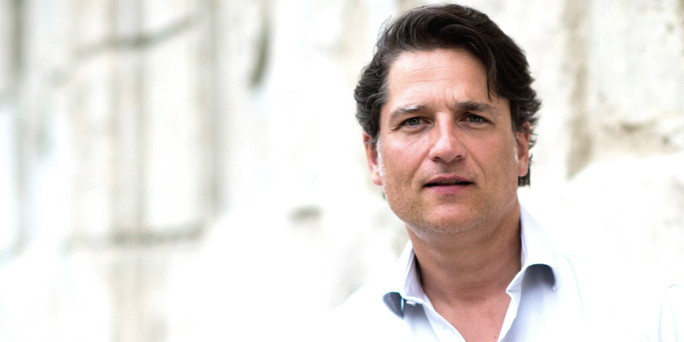
In Germany during the last few weeks there has been a debate about the question of the difference between a critique of Israeli policy and anti-Semitism – a subject that I discussed in a previous post. The debate centres on the 45 year-old German journalist Jakob Augstein, who was recently called an anti-Semite by the Simon Wiesenthal Center because of his criticism of Israel in his columns for Spiegel Online. He was brought up by Rudolf Augstein, the founder editor of Spiegel, and is a major shareholder in the company that owns it. But it emerged in 2002 that his biological father is actually Martin Walser, the 85 year-old writer who is most associated with attempts to draw a Schlußstrich, or final line, under the Nazi past. So influential is Walser perceived to have been – Chancellor Gerhard Schröder seemed implictly to approve of the remarks Walser made in his famous speech at the Paulskirche in Frankfurt in 1998 – that academics have written of a “Walserisation” of Germany during the last decade and a half.
 Hans Kundnani