A few weeks ago the cover of the Spiegel showed Chancellor Angela Merkel in combat fatigues with the headline: “German weapons for the world”. The story (available in English online) was about the so-called Merkel doctrine – an implicit policy of staying out of difficult and unpopular Western interventions such as the one in Libya last year while selling arms to other countries, in particular in the Middle East, to enable them take greater “responsibility” for security. The Federal Republic has traditionally had a comparatively restrictive arms-export policy and in particular rejected the sale of arms by German companies to undemocratic governments or countries in “conflict regions”. But under Merkel, according to the Spiegel story, the German defence industry – which employs 80,000 people – is booming as the government increasingly approves the sale of weapons to undemocratic regimes in areas of actual or potential conflict.
The deep, deep sleep of England
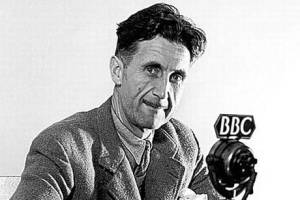
One of my favourite passages in the English language is the last paragraph of George Orwell’s Homage to Catalonia (1938). In it he describes coming back to Blighty after fighting in the Spanish Civil War, in which he was shot in the neck and nearly killed. Forseeing World War II and in particular the Blitz, he captures beautifully the sense of cognitive dissonance one often has on returning from the world to the familiarity of England. The passage also evokes Britain’s tendency to ignore developments in contintental Europe until it is too late: the “deep, deep sleep of England”. It seems to me as apt in 2012 as it was in 1938:
Farocki’s father
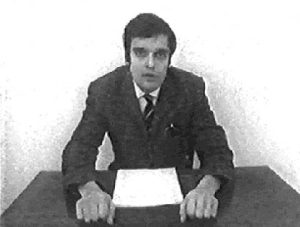
I recently read Quinn Slobodian’s book Foreign Front, which I was reviewing for the TLS. It is mainly about the role that students from Africa, Asia and Latin America played in the West German New Left in the 1960s and the complex relationship between intellectuals in the West and revolutionaries in the Third World. But it also includes a discussion of the early work of the German filmmaker Harun Farocki. I was familiar with Farocki and knew he was of Indian origin. But until reading Slobodian’s book, I hadn’t realised that his father was a supporter of Subhas Chandra Bose, the Indian nationalist leader who went to Berlin during World War II and formed an alliance with the Nazis. That fact makes Farocki a particularly interesting figure who links the story of Germany’s 1968 generation – the subject of my book, Utopia or Auschwitz – with the story of the Indian independence movement.
Reblimping

I’ve been a fan of the movies of Powell and Pressburger since watching A Matter of Life and Death in a film studies class in high school. Last weekend I went to the National Film Theatre in London to re-watch another of my favourite movies of theirs, The Life and Death of Colonel Blimp (1943), which has recently been restored and re-released. Martin Scorsese – another of my favourite directors – is a big fan of the film and says it becomes “more resonant, more moving, more profound” every time he watches it. For Scorsese, the film is about time, memory and loss. According to the BFI, it’s also “probably the greatest study of ‘Englishness’ in the cinema”. But, as I watched it again last weekend, I found myself wondering whether it’s also about Powell and Pressburger themselves.
German reunification and European disintegration
There are multiple ways of looking at the euro crisis. Northern Europeans in general and Germans in particular tend to look at it as a crisis caused by fiscal indiscipline by southern European countries in general and Greece in particular, who didn’t stick to the rules. Others, particularly in France, look at it above all as a crisis caused by unregulated financial capitalism, which created banks that were too big to fail and therefore had to be bailed out by governments. Others still, particularly in the UK, look at it above all as crisis caused by the flawed architecture of the euro itself – a common currency without a common treasury – which meant it could never work. But if you take an even longer view, it’s also possible to see the euro crisis as the unforseen consequence of German reunification.
Germany’s economic narcissism
At the end of a comment piece I wrote last month for the Guardian website I talked about Germany’s “economic narcissism”. A lot of the comments on the piece focused on my use of the phrase, so I thought I’d try to explain in more detail what exactly I meant. By using the term, I wasn’t simply trying to say that Germany was responding to the euro crisis in a selfish way. It seems to me that, in the end, whether you think Germany is pursuing its own economic interests or the long-term interests of Europe as a whole depends to a large extent on the economic theory in which you believe. By using the term “economic narcissism” what I had in mind was something related but slightly different: the way the debate in Germany about the euro crisis is so inward-looking.
A post-Zionist Germany?
In a piece about Germany as a geo-economic power that I recently wrote for Internationale Politik, a German foreign-policy journal, I argued that Germany’s “special relationship” with Israel might in future weaken. It seems to me that the relationship is all that remains of the foreign policy based on the idea of Auschwitz as Germany’s raison d’état that Joschka Fischer sought to develop (a theme of my book, Utopia or Auschwitz). Although Chancellor Angela Merkel is personally committed to the Jewish state, I think she is under increasing pressure from an anti-Israeli public opinion and from Germany’s economic interests with the Arab world. I also wonder whether a dramatic event – such as an Israeli military strike on Iran – could be a tipping point that creates a rupture between Germany and Israel in the way that the Iraq war did between Germany and the US.
Letters to Diet
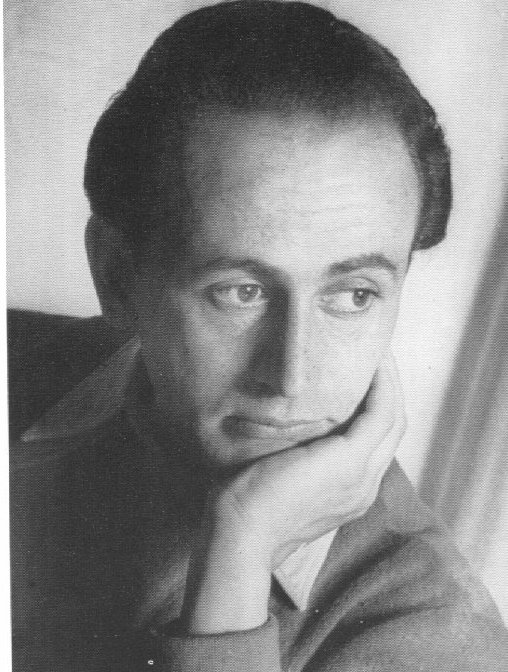
There is currently an exhibition in Holland about the love affair between the poet Paul Celan and Diet Kloos, a Dutch woman who had been a member of the resistance during World War II. I’ve written before about Celan – one of the most important figures in post-war German literature. However, until now I didn’t know much about Kloos, an oratorium singer whose husband was executed by the Nazis in 1945 after being tortured in front of her. Celan and Kloos met in Paris in 1949, when Celan was studying at the Sorbonne and Kloos at the conservatory in The Hague. The exhibition is based on the 12 letters that Celan sent Kloos during the following year (Kloos’s replies have been lost). The correspondence also includes three of Celan’s early poems, including his most famous, “Todesfuge” (“Deathfugue”, as John Felstiner translates it), which was written in 1944 and published in 1948.
Tribal qualities

I’ve always been fascinated by Walter Rathenau, the German foreign minister who was assassinated by anti-Semitic nationalists in Berlin in 1922. The son of Emil Rathenau, the founder of the groundbreaking Berlin-based electrical company AEG, he had run the German ministry of war’s crucial raw materials department during World War I and created what some see as the first planned economy. However, after the war, he and other leading Jewish figures were blamed by the right for the German defeat as part of the so-called Dolchstoßlegende – the myth of a “stab in the back”. In particular, as foreign minister, Rathenau became fatally associated with the humiliating terms of the Treaty of Versailles. In a sense, his assassination symbolises the beginning of the end of the dream of Jewish assimilation in Germany.
Adorno and the Holocaust
I was pleased to see a review of Utopia or Auschwitz in the journal Holocaust and Genocide Studies, which is published by the United States Holocaust Museum. The reviewer, Philip Spencer, raises the interesting question of whether the West German student movement misunderstood Theodor Adorno and the Frankfurt School’s interpretation of the Nazi past. Spencer says the Frankfurt School had a “sophisticated” view of the Holocaust as a “radical break” whereas the student movement “over-generalized” the Holocaust so that it became “only one case of genocide among many”. I think this is basically right. But it also seems to me, though perhaps I didn’t bring this out clearly enough in the book, that the tension between these two views of the Holocaust existed within the work of Adorno himself. So perhaps the student movement didn’t so much distort Adorno as read him selectively.
 Hans Kundnani