I call it moral narcissism: the tendency to think about morality in terms of how your actions make you feel about yourself rather in terms of their consequences for others. I argued in my book, Utopia or Auschwitz, that German foreign policy debates, for example about the Kosovo and Iraq wars, tend to be narcissistic in this way – they focused, it seems to me, on German identity rather than on the fate of the people in the places where the crises were happening. So I was interested to see that my colleague José Ignacio Torreblanca made a similar point – but in Weberian terms – about Germany’s response to the euro crisis in an op-ed in the FT recently. He suggested that current German foreign policy was gesinnungsethisch rather than verantwortungsethisch – that is, it is based on Max Weber’s concept of an “ethics of conviction” rather than an “ethics of responsibility”. According to this kind of conscience-centred (rather than consequence-centred) thinking, all that matters is being right – regardless of the effects.
Thoughts on Buchenwald
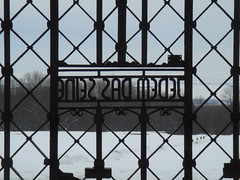
Perhaps no other place in Germany embodies Adorno and Horkheimer’s idea of the “dialectic of enlightenment” more than Buchenwald. The concentration camp, which I visited for the second time last weekend, is located on the Ettersberg, a hill just five miles away from Weimar – the home of German classicism. It therefore provides a particularly powerful illustration of the intimate connection between German culture and German barbarism. In fact, in 1937 the camp was literally built around an oak tree at which Goethe is supposed to have sat and discussed literature and life when he lived in Weimar in the late eighteenth and early nineteenth century. In a sense, therefore, Buchenwald – which President Obama visited last year – stands, more than any other concentration camp or death camp, for Nazism as a Zivilisationsbruch, or civilisational break.
Utopia or Sparta

I recently read Theodor Herzl’s novel Altneuland (1902), which Walter Laqueur aptly describes in the preface to the third edition of his History of Zionism as “political science fiction”. In it, Herzl imagines the future Jewish state – which, he had argued in Der Judenstaat (1896), would be propelled into existence by the misery of Jews in the diaspora – as it might be in the twenties. But, ironically, after insisting in Der Judenstaat that he was not describing a Utopia, he proceeded in Altneuland six years later to do exactly that: Herzl’s imaginary new society is a kind of paradise in which the economy based on the principle of “mutualism” runs smoothly, education is free and women have equal rights. Most strikingly of all, however, Jews and Arabs live in perfect harmony. “Why should we have anything against the Jews?” asks an Arab character in the novel. “They have enriched us and they live with us like brothers”.
Guilt in German
In my last post, I talked about the backlash against Germany’s culture of memory. In a sense, this development is historically inevitable. But is it also somehow built in to the way Germans think about guilt and in particular in the etymology of the terms that Germans use to describe dealing with the Nazi past? For example, the German word for guilt, Schuld, is also the word for a debt – which can by definition be paid off. (Nietzsche famously uses this etymological connection in On the Genealogy of Morals to argue that that the concept of guilt ultimately derives from the idea of debt.) Perhaps the most striking illustration of the idea of guilt as a debt that can be paid off is the restitution – in German Wiedergutmachung (literally, “making good again”) – that West Germany paid to Israel after World War II. So is there something specific about the way Germans think about guilt that has influenced the way they deal with the Nazi past and in particular created a desire to draw a line under it?
What’s it got to do with me?

For a while now, I’ve wondered whether there is a shift taking place in Germany’s attitude to the Nazi past. It seems to me, although it is of course diffcult to prove this in a scientific way, that, rightly or wrongly, Germany increasingly sees itself as a “normal” country for which Nazism and in particular the Holocaust is no longer of special relevance. So when I was in Berlin this week, I was interested to see the cover story in the magazine of the weekly newspaper Die Zeit about attitudes to the Nazi past among German teenagers. The headline was: “Was geht das mich noch an?” or “What’s it got to do with me?” The analysis was based on an attitude survey of 14-19 year-olds, most of whom affirmed the importance of ongoing remembrance. But, more worryingly, teachers interviewed for the article also said their students were often uninterested in the Holocaust or even, when shown photos of mass executions, expressed sympathy for the perpetrators rather than the victims.
Germany’s anti-nuclear lacuna
Germany, I think it’s fair to say, is the most anti-nuclear country on earth. I just returned from a few days in Berlin, where the news was dominated by protests over the weekend against the transportation of nuclear waste from German nuclear power stations to Gorleben in Lower Saxony. The protests were seen as a triumph for the German anti-nuclear movement, which opposes the current centre-right government’s recent decision to extend the life of the remaining nuclear power plants in Germany. Germans are of course also passionately opposed to nuclear weapons, as illustrated by Foreign Minister Guido Westerwelle’s attempt to remove the remaining US nuclear weapons from the country (see my essay in Prospect last year on this). But one thing puzzles me about this anti-nuclear attitude. If the Germans are so opposed to nuclear power and weapons, why, as I suggested in a previous post, are they apparently so relaxed about the prospect of a nuclear Iran?
Ordinary men or ordinary Germans?
After finishing Jonathan Littell’s novel The Kindly Ones – see my recent post – I went back and re-read Ordinary Men. Police Battalion 101 and the Final Solution in Poland, Christopher R. Browning’s extraordinary but troubling study of the involvement of a unit of part-time policemen in the Holocaust. Using detailed interviews carried out by state prosecutors in the 1960s, Browning reconstructs how this group of average, middle-aged men from Hamburg readily killed and deported tens of thousands of Jews in a series of actions in support of the SS in the Lublin district of occupied Poland in a 16-month period from July 1942 to November 1943. He argues that most of the men were not so much anti-Semitic Nazis as “ordinary men” who killed out of obedience to authority and peer pressure. In my post I suggested The Kindly Ones could be read as an illustration of how a perpetrator might use Browning’s “ordinary men” thesis to absolve himself. But is the thesis itself right?
Celan in NW6
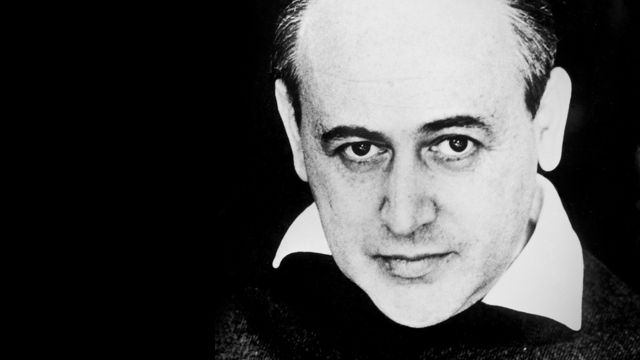
Although Paul Celan is my favourite poet, I was somehow unaware of his poem, “Mapesbury Road”, which refers to a street that is about five minutes from where I live in north-west London and was written in 1968 immediately after the death of Martin Luther King and the attempted assassination of West German student leader Rudi Dutschke. As I learned from a fascinating programme on Radio 4 about the short poem last week, Celan’s paternal aunt Berta Antschel – one of the few relatives of his who had survived the Holocaust – lived in a flat in the eponymous street, where Celan visited her in April 1968 and wrote the poem, which was published posthumously in the collection Schneepart in 1971. Like most of Celan’s late poems, it is incredibly dense with compound words (e.g. “Mitluft”, which Michael Hamburger translates as “co-air”) and therefore difficult to decipher. As George Steiner says in the programme, Celan’s poems are “on the other side of our current horizons”.
Extermination and narration
One of the paradoxes of the Holocaust is that the more we know about it, the less we feel we understand it. Perhaps because of the way that in the last fifty years the Holocaust has become the West’s central negative moral reference point (see the brilliant epilogue to Tony Judt’s Postwar on this), it has become ever harder to comprehend the mentality of those responsible for it. In that context, The Kindly Ones – Jonathan Littell’s 900-page novel told from the perspective of an SS Sturmbannführer (equivalent to a major) who is intimately involved in the Final Solution – is a remarkable achievement of imagination. The novel, which was originally published in French as Les Bienveillantes and won the Prix Goncourt in 2006, powerfully evokes the everyday life of doctors and lawyers who quote Tertullian and Herodotus and discuss Kant and Kierkegaard in between killing Jews. But to me there was something unconvincing about the narrator’s account of “how it happened”, as he puts it in the first sentence of the book. So is this a flaw? Or is it perhaps actually deliberate?
Germany and the West
The German historian Heinrich August Winkler delivered the first Ralf Dahrendorf lecture at the LSE yesterday on the West as an “incomplete project”. Winkler, who was himself deeply influenced by Dahrendorf, skilfully sketched the history of the “normative project of the West”, which he said did not begin with the Enlightenment but instead had much older roots. Challenging Max Weber’s “very German point of view” in the preface to his writings on the sociology of religion, he argued that what makes the West unique is its political rather than economic or cultural achievements – above all the separation of powers and secularisation. Winkler also made some interesting remarks about Germany’s “deviations” from the West – the theme of his magnum opus, Der lange Weg nach Westen (The Long Road West). Germany, he said, was a paradox: it played a central role in developing the normative project of the West (e.g. Immanuel Kant – who like Winkler came from Königsberg) but also produced the most radical European rejection of it: Nazism.
 Hans Kundnani