
Waiting for Gilad

shalit.650.1

Israel obtained a video showing Gilad Shalit alive today in exchange for the release of 19 Palestinian women from its jails. The 23 year-old Israeli soldier was captured by Hamas in a cross-border raid in the summer of 2006 and since then there had been no evidence he was alive. Reading from a piece of paper in a voice in a breaking voice, he says he dreams of the day of his release and hopes the current government reaches a deal. Hamas is demanding the release of up to 1,000 Palestinian prisoners, including convicted terrorists, in exchange for Shalit’s release.
Continue reading

The Social Democratic tragedy

The German Social Democrats are hoping that voters will today defy all the pre-election predictions and give them a sufficient number of seats in the Bundestag to form a government with the Greens. It’s pretty unlikely: for most of the election it looked as if the Christian Democrats were way ahead, and although the Social Democrats have caught up a little, it still looks as if the best they can expect is to be the junior partner in a Christian Democrat-led grand coalition for another four years.

Continue reading

The war no one in Germany is talking about

I’ve been in Berlin for a few days now in the run-up to the general election that takes place on Sunday. One of the remarkable things about the campaign, which has been lacklustre even by German standards, is the way that the two leading candidates, the Christian Democrat chancellor Angela Merkel and the Social Democrat foreign minister Frank-Walter Steinmeier, who have shared power in a grand coalition for the last four years, have carefully avoided discussing the key issues facing Germany. Case in point: the war in Afghanistan.

Continue reading

Germans love Obama – for now

HBhZjjbB_48899ccd0e76_Pxgen_r_700xA

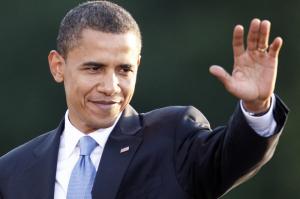
The Europeans love Obama, and all of the Europeans, the Germans love him the most. That is one of the not altogether surprising but nevertheless interesting findings of the 2009 edition of Transatlantic Trends, an annual survey by the German Marshall Fund that tracks attitudes to the transatlantic relationship in Europe and the United States. According to the poll, 92% of Germans approved of President Obama, compared to only 12% who approved of President Bush this time last year – in other words, a whopping 80-point “Obama bounce”, as the authors of the report call it. (In Britain, by contrast, support for the US president jumped from 17% to 82% – a mere 65-point difference.)

Continue reading

The Zeca Schall case

Schall

The case of Zeca Schall, a 45 year-old black German politician, got a lot of publicity during the election campaign in the eastern German state of Thuringia last month. It all started when the Christian Democrats featured Schall – until then a little-known local party official – on an election billboard along with Dieter Althaus, the Christian Democrat prime minister of Thuringia. The far-right NPD called Schall a “Quotenneger” (which means either “token negro” or “token nigger”; the German word Neger is ambiguous) and Schall was given police protection. Most of the media coverage outside Germany (CNN even covered it) focused on the persistence of racism in the former East Germany, but I actually found two other aspects of the story interesting as well.

Continue reading

Random thoughts on the German language

Favourite word: generalstabsmäßig – General Staff-like, as in with military precision
Weirdest phrase: ein inner Reichsparteitag – an inner Nuremberg rally, as in a private celebration of the triumph of the will
Most useful word that doesn’t exist in English: Auseinandersetzung
Most evocative word: Mandel – see Paul Celan
Nicest-sounding word: Schmetterling – butterfly
Most annoying Fremdwort – foreign word: Handy – mobile
Philosophically weirdest word: aufheben – see Hegel
Existentially most interesting word: Freitod – suicide = free death
Most important word for understanding Germany: Geist – mind/spirit

New German theories of colour

Back in 1985, the Social Democrats and Greens in the state of Hesse formed the first ever “red-green” government in German politics. When it collapsed less than two years later, it seemed destined to be a footnote in German political history. In fact, it turned out to be the prototype for a string of other “red-green” governments and ultimately for the national government under Gerhard Schröder in 1998. In the city-state of Hamburg the Christian Democrats and Greens are currently negotiating an agreement to form a “black-green” coalition under Ole von Beust that may eventually re-draw Germany’s political map in a similar way to that first “red-green” experiment. It also parallels other recent attempts elsewhere – for example by David Cameron in the UK and by former Bush speechwriter David Frum in the US – to formulate Green conservatism.

Continue reading